

How Heavy Menstrual Bleeding Happens
Do You Experience Heavy, Painful Periods?
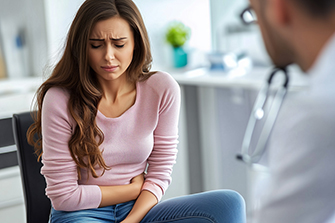
Women who experience heavy, painful periods know how difficult it can be. These difficult days every month can negatively impact your life in many ways, and it seems like no matter what you try, it just won’t stop. Month after month, you are left in pain, worried, and unsure how to proceed. If you’re ready to finally address your heavy menstrual bleeding, we can help. Keep reading to discover ways to manage your heavy menstrual bleeding, including how a Heavy Menstrual Bleeding Research Study can help.
Do I Have Heavy Menstrual Bleeding?
Every woman experiences heavy menstrual bleeding at some point, especially during the first day or two of their period. But, when does it become a cause for concern and enough to seek medical attention?
You might have heavy menstrual bleeding if you
- Need to change your tampon or pad after less than 2 hours.
- Have a menstrual flow that soaks through one or more pads or tampons every hour for several hours in a row.
- Need to double up on pads to control your menstrual flow.
- Need to change pads or tampons during the night.
- Have menstrual periods lasting more than 7 days.
- Have a menstrual flow with blood clots the size of a quarter or larger.
- Have a heavy menstrual flow that keeps you from doing the things you would do normally.
- Have constant pain in the lower part of the stomach during your periods.
- Are tired, lack energy, or are short of breath.
What Conditions Could Be Related?
Many women who experience heavy menstrual bleeding also have a co-occuring disorder that can be causing the heavy menstrual bleeding. Oftentimes, addressing this can help your difficult menstrual periods. These include:
Bleeding disorders:
- Von Willebrand disease (VWD)
- Platelet function disorders
- Other bleeding disorders
- There are other possible causes of heavy menstrual bleeding.
Uterine-related problems
- Growths or tumors of the uterus that are not cancer; these can be called uterine fibroids or polyps.
- Cancer of the uterus or cervix.
- Certain types of birth control—for example, an intrauterine device (IUD).
Problems related to pregnancy, such as miscarriage, which is when an unborn baby (also called a fetus) dies in the womb (uterus) or an ectopic pregnancy, which is when a fetus starts to grow outside the uterus
Conditions that are related to hormonal imbalances, such as polycystic ovarian syndrome (PCOS), lead to irregular (less frequent) periods; when a woman does get her period, it might last many days longer than is typical.
What is the Heavy Menstrual Bleeding Research Study?
Women’s Health Clinical Studies is seeking participants who want access to the newest, cutting-edge technology and investigational medication for heavy menstrual bleeding. Participants in the study can look forward to:
- Guaranteed compensation for time, travel, and expenses
- No-cost health consultation and examination
- No-cost lab tests
- No-cost study-related medication
- Oversight by a central ethics committee
- FDA and HIPAA compliance
- Confidentiality and adherence to safety standards
To pre-qualify over the phone and become a participant, simply give us a call at (682) 516-3435 or click here to provide us with your contact information.
For more information, visit us at WomensHealthClinicalStudies.com!







Leave a Reply